Open source · Self-hosted

The AI-first API backend live in minutes

Collections, APIs and MCP for your agents. Live in under 5 minutes. Your data, your control.
  • 0.0 MB Size
  • <0 MiB Idle memory
  • 0 container backend + admin UI
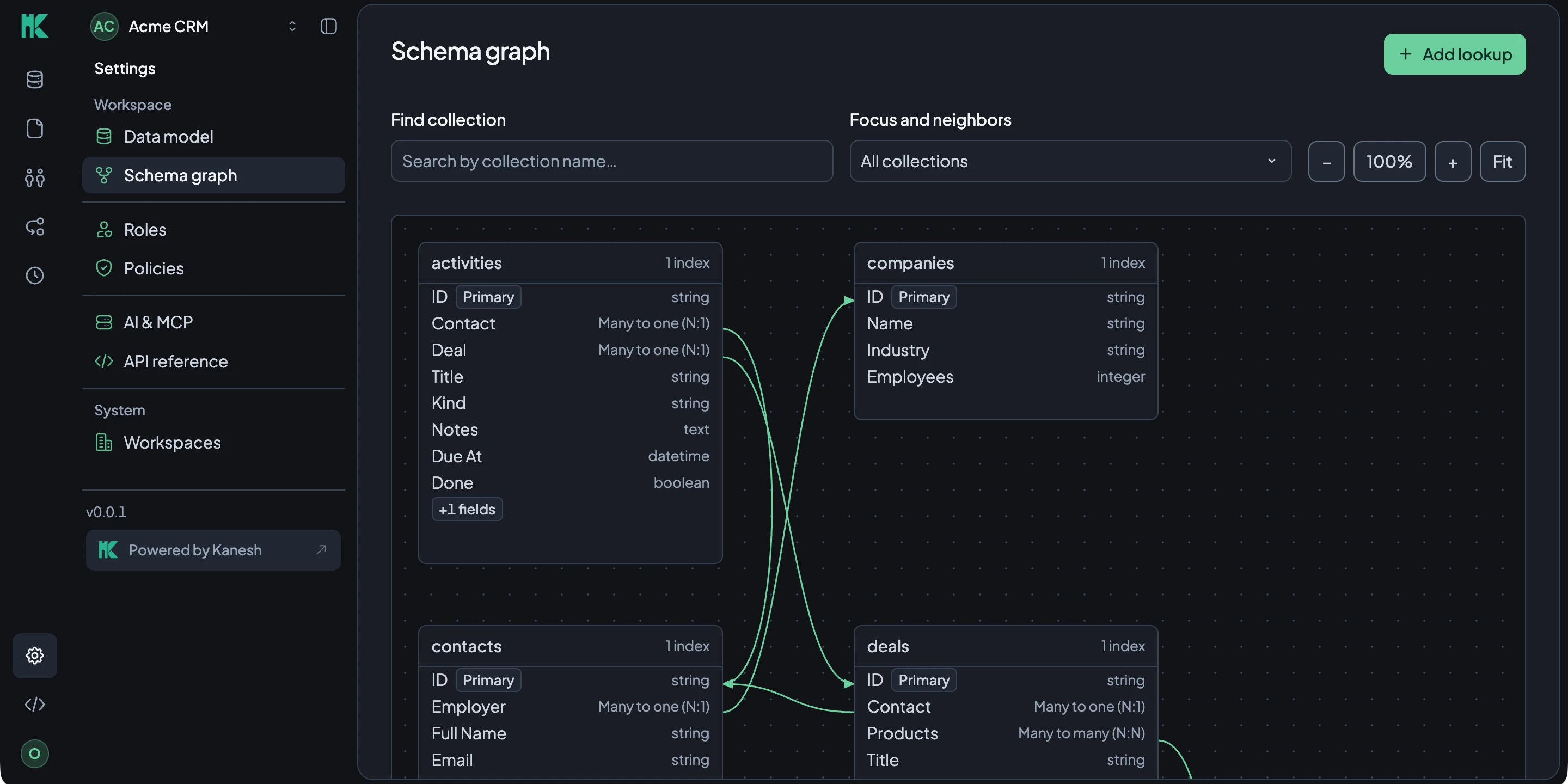
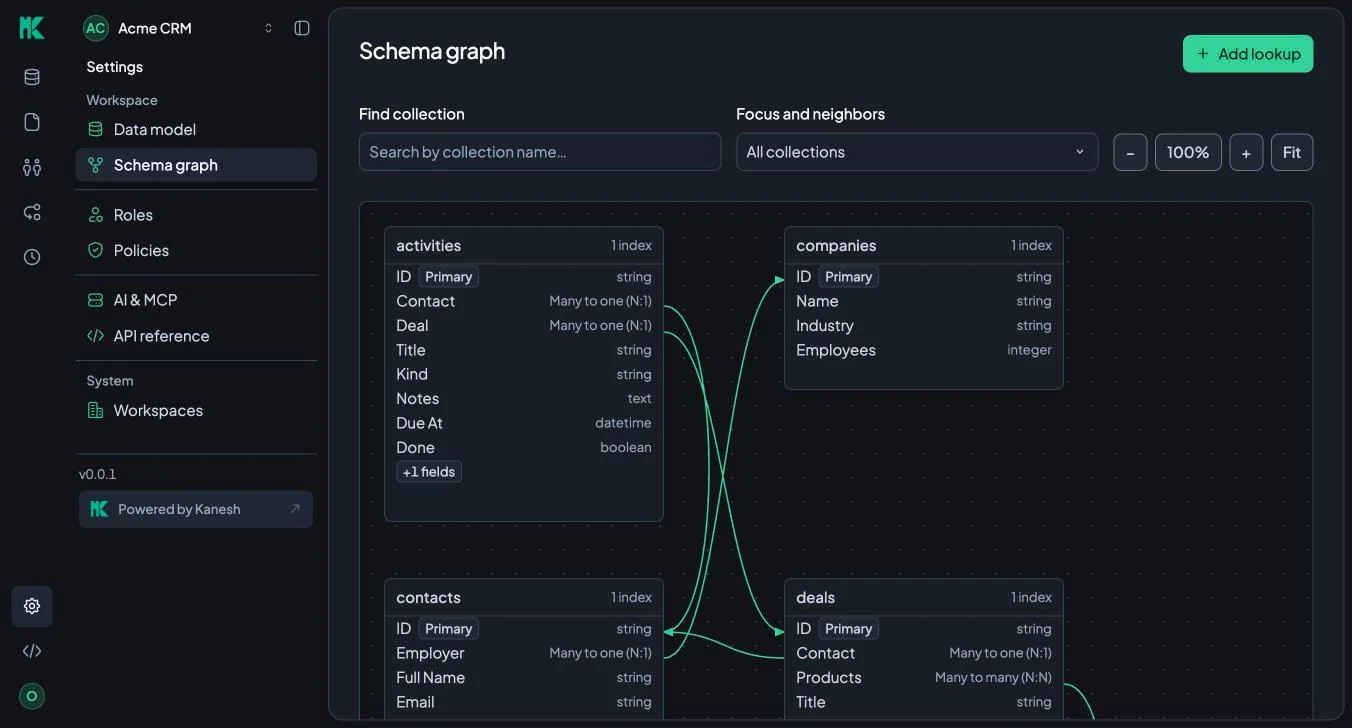
Kanesh Studio schema graph linking activities, companies, contacts and deals
curl -fsSL https://kanesh-site.cap.heyloomora.com/install.sh | sh

01AI-first

Describe your app. Your agent builds the backend.

Tell Codex or Claude what you are building. It creates the collections and relations through the API, then reads your data over MCP with your permissions.

You

“”

  1. Reads the OpenAPI spec
  2. Creates collections and relations over REST
  3. Checks the schema over MCP
Agent working Example run

MCP tools are read-only today; writes go through the REST API with your token.
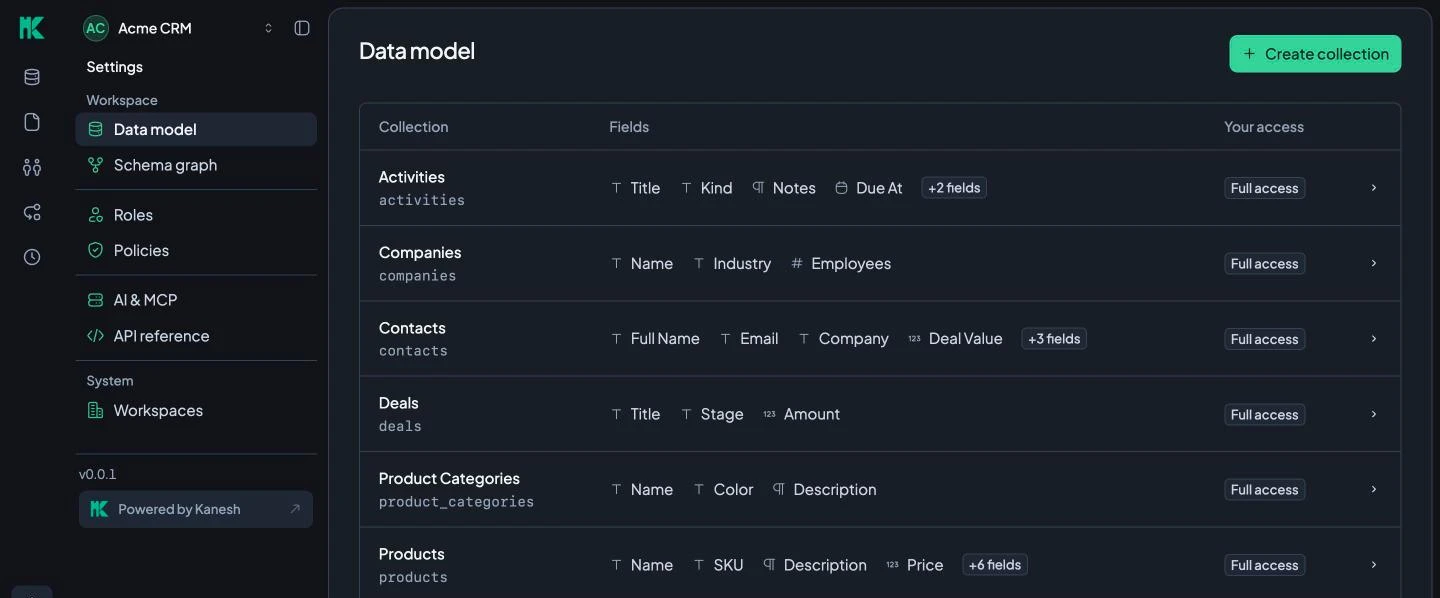
Kanesh Studio data model listing collections with their fields

02Multi-workspace

Every client, every product, one install.

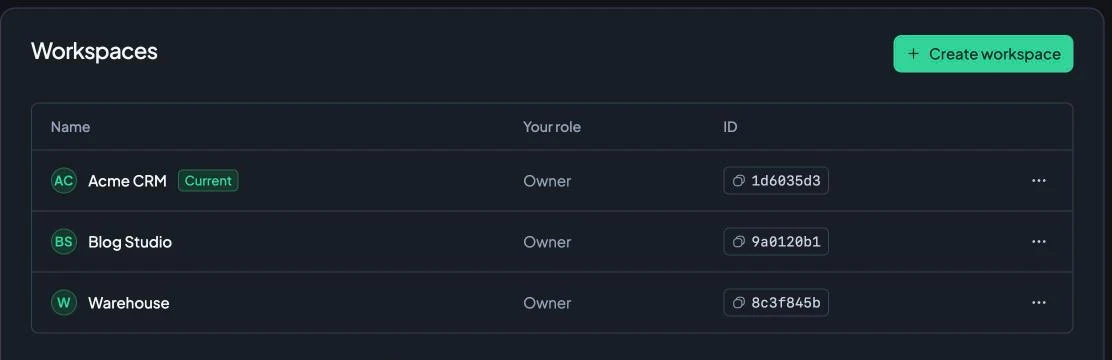
Spin up a workspace per client, app or team. Each one has its own schema, members, roles, API and MCP endpoint, isolated from the rest.

One workspace is free. Unlimited workspaces are $9 per month per install. See pricing →

Kanesh Studio workspaces list with Acme CRM, Blog Studio and Warehouse
  • Own schema and data
  • Own members and roles
  • Own REST, GraphQL and MCP endpoint

Light enough to host them all

Size
2 GB
0.0MB
Idle memory
4 GB
<0MiB

Struck-through: a typical self-hosted stack (Plane’s documented minimum). Kanesh: measured in a local smoke test.

  • One Go binary with Studio embedded
  • No Node server at runtime
  • Every response reports its response_time

03Your stack

Pick your database. Bring your agent.

Database

  • SQLite Default
  • PostgreSQL Supported
  • MySQL Supported

File storage

  • Database blobs Built in
  • S3 / MinIO Supported

Agents over MCP

  • Codex
  • Claude Code

04Model

Shape SQL tables in a Studio, not in migrations.

Create collections, fields and relations visually. Kanesh writes the tables and keeps the schema honest.
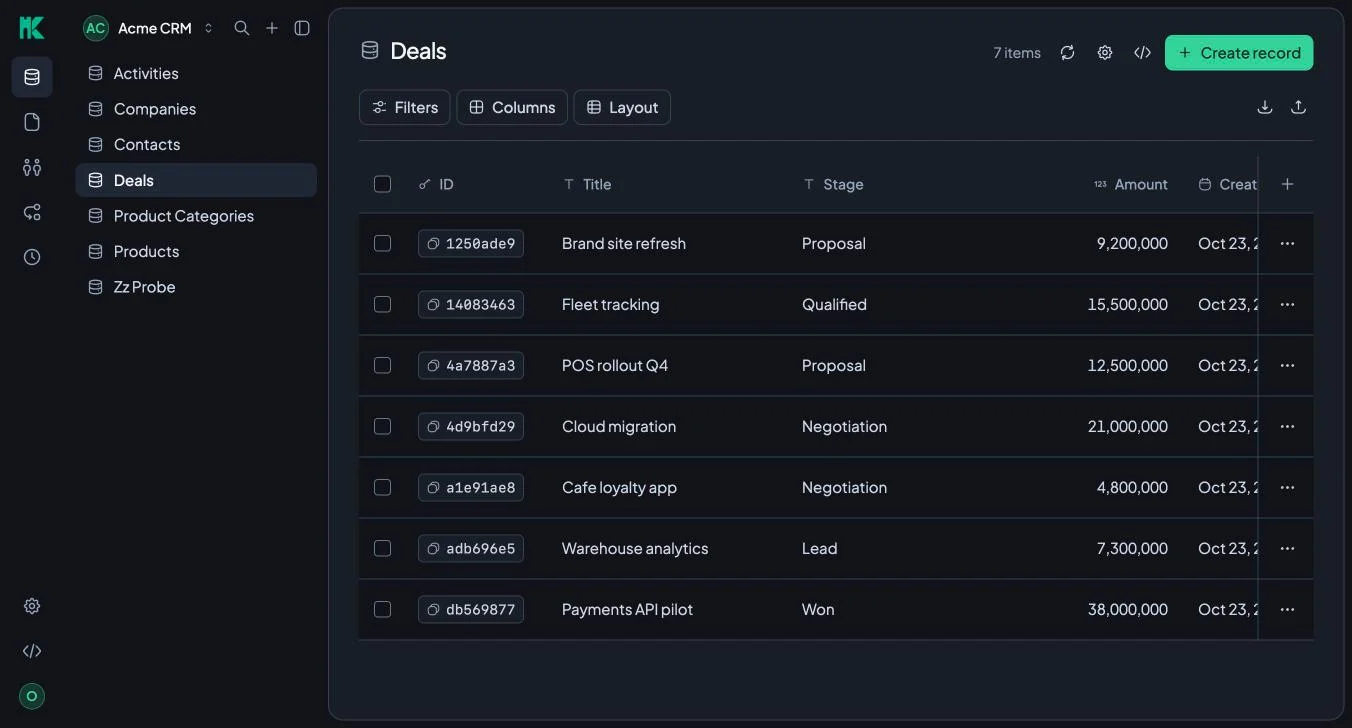
Kanesh Studio records table for a Deals collection with stage and amount columns

Typed fields

Validated from metadata. No rebuild per collection.
  • string
  • text
  • integer
  • float
  • boolean
  • datetime
  • json
  • file
  • image
Kanesh Studio schema graph linking activities, companies, contacts and deals

Real relations

Junction tables with foreign keys on SQLite and PostgreSQL.

  • N:1 Many to one
  • 1:N One to many
  • N:N Many to many

05APIs

Every collection is an API the moment you save it.

One set of authorized operations behind four transports. Tokens are hashed, scoped to their owner and revocable.

REST
{data, meta} envelope, filters, sort, pagination
GraphQL
Workspace-scoped queries and mutations
OpenAPI 3.1
Exported from your live schema
MCP
Read-only tools for agents

GET /api/v1/workspaces/:ws/collections/deals/records?query=…

{ "filters": [{ "field": "stage", "operator": "eq", "value": "Won" }],
  "sort": [{ "field": "amount", "descending": true }],
  "meta": ["total_count"] }
{
  "data": [{ "title": "Payments API pilot", "stage": "Won" }],
  "meta": { "response_time": 3 }
}
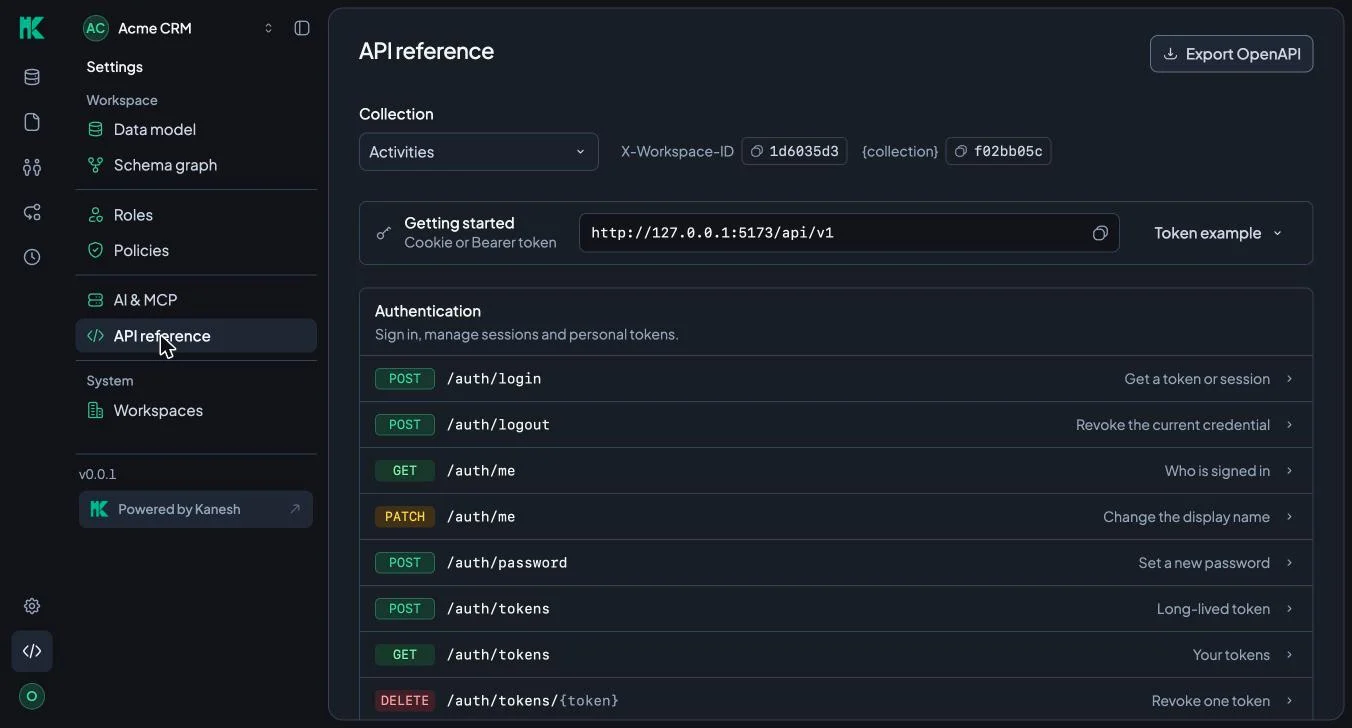
Kanesh Studio API reference listing authentication endpoints and an OpenAPI export button

Query without writing SQL

  • Filters (up to 8): eq, ne, gt, lt, contains, null
  • Sort (up to 3 fields)
  • Pagination with total counts
  • Full-text search
  • Choose returned fields
  • Lookups across collections (up to 3)

Secure by default

  • Session cookies are HttpOnly
  • API tokens are stored hashed and expire
  • Writes require same-origin intent
  • Permissions per collection and role
  • No tokens in query strings
  • Logs never include bodies or credentials

06Self-host

From docker run to a live API in minutes.

  1. 1Run the container
  2. 2Claim the install
  3. 3Create a collection
  4. 4Call your API

Install Kanesh with Docker on this machine, start it on port 8080 and connect its MCP endpoint to my agent config. Source: https://github.com/kaneshdev/kanesh

Uses the Codex or Claude Code subscription you already have. Kanesh needs no AI key.

Then open http://127.0.0.1:8080 and paste the claim token.

07Coming soon
What we are building next.

  • Soon

    Workflows

    Run steps when records change.

  • Soon

    Functions

    Run your own code next to your data.

  • Soon

    More sign-in options

    OAuth and single sign-on.

  • Soon

    Realtime

    Subscribe to record changes.

  • Soon

    Agent writes over MCP

    Let agents create records with your permissions.

Buy me a coffee